
July 25, 2026 · Longevity, ageing biology and somatic mutations
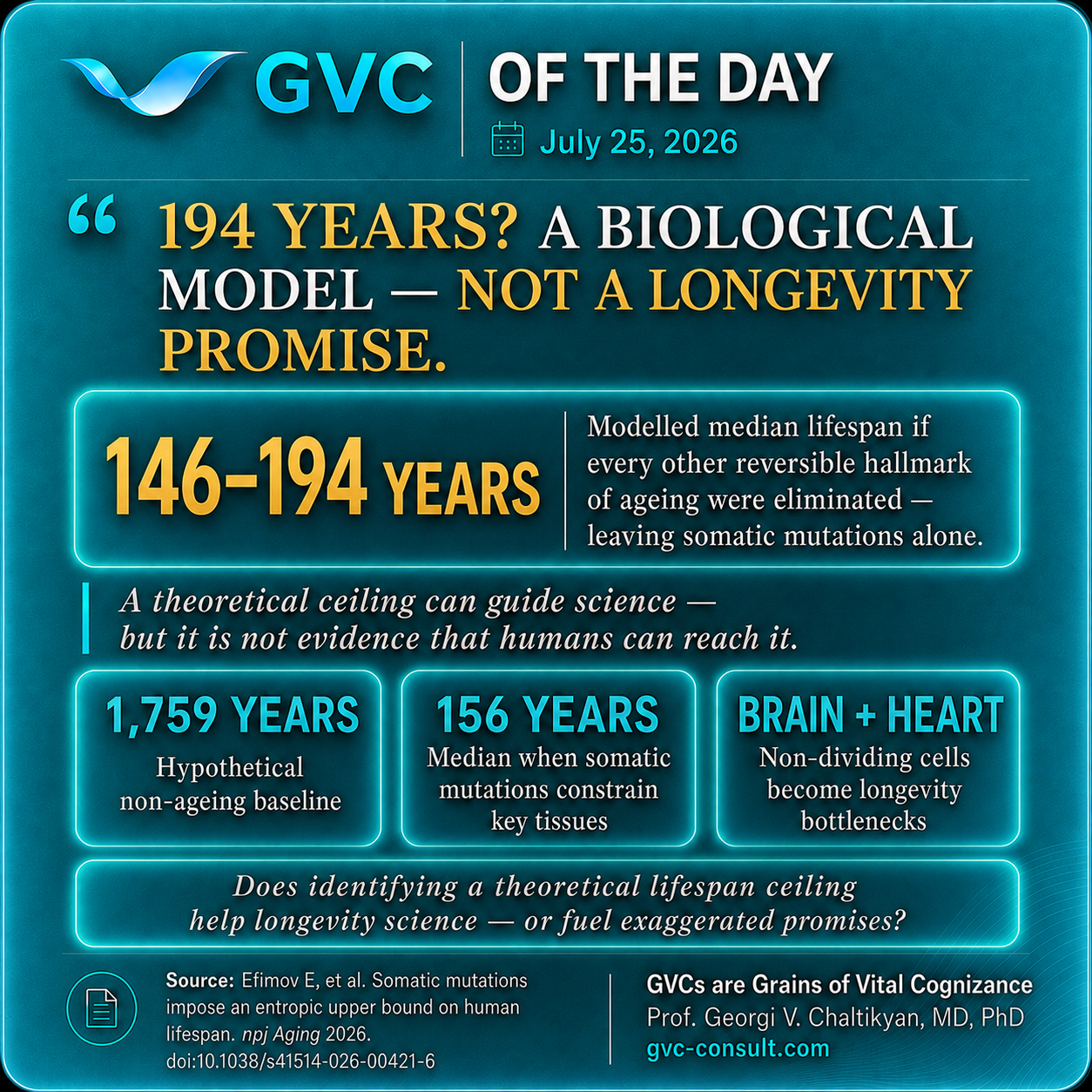
194 Years? A Biological Model—Not a Longevity Promise
A new mathematical model asks how long humans might live if every reversible hallmark of ageing were eliminated except somatic mutations. Starting from a hypothetical non-ageing baseline of 1,759 years, the model estimates that mutation-related damage would reduce median lifespan to 156 years in key tissues and to 146–194 years in an integrated multi-organ model.
The limiting tissues are particularly revealing. Long-lived, non-dividing cells—especially neurons and cardiomyocytes—cannot dilute accumulated mutations through cellular replacement, making the brain and heart critical bottlenecks. Proliferating tissues such as the liver behave differently because damaged cells can be replaced.
These results are theoretical, not a forecast or longevity promise. The authors conclude that somatic mutations alone cannot explain present-day mortality, indicating that other mechanisms of ageing remain comparably important. Nature also identifies the current article as an unedited early-access manuscript that may change during final production.