
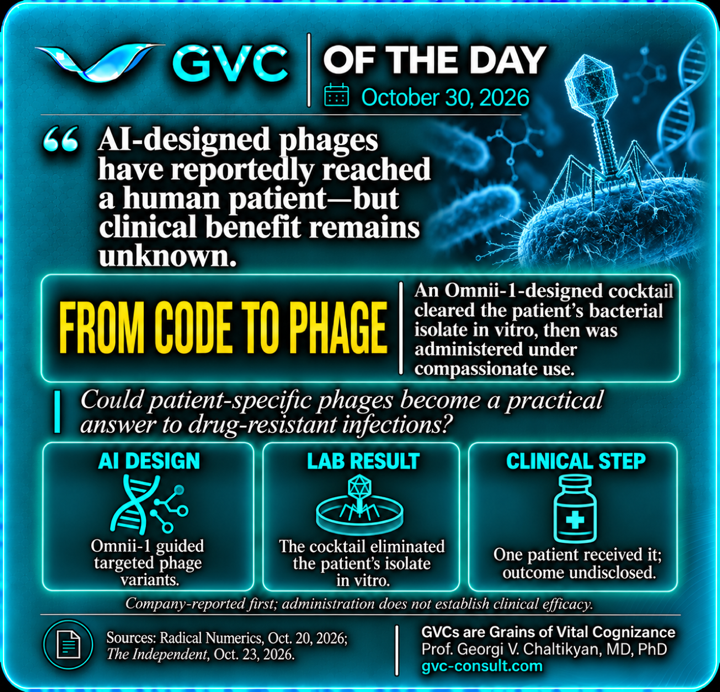
AI-Designed Phages Reach a Patient
A company reports compassionate-use administration after its phage cocktail cleared the patient's bacterial isolate in vitro; the clinical outcome is undisclosed.
Read this GVC →Grains of Vital Cognizance by Georgi V. Chaltikyan
One consequential development. One evidence-led thesis. One question that invites a better conversation.
A company reports compassionate-use administration after its phage cocktail cleared the patient's bacterial isolate in vitro; the clinical outcome is undisclosed.
Read this GVC →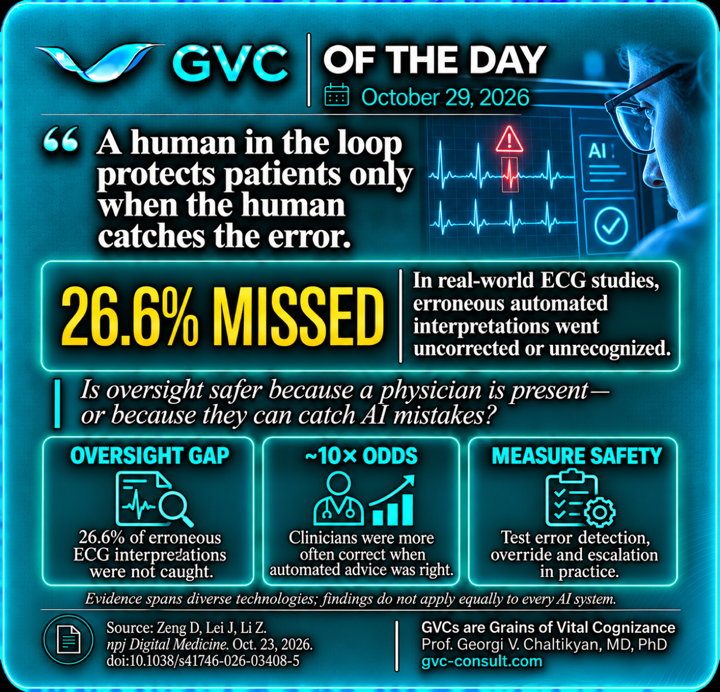
A review finds that supervising AI is protective only when clinicians can recognize and correct its errors.
Read this GVC →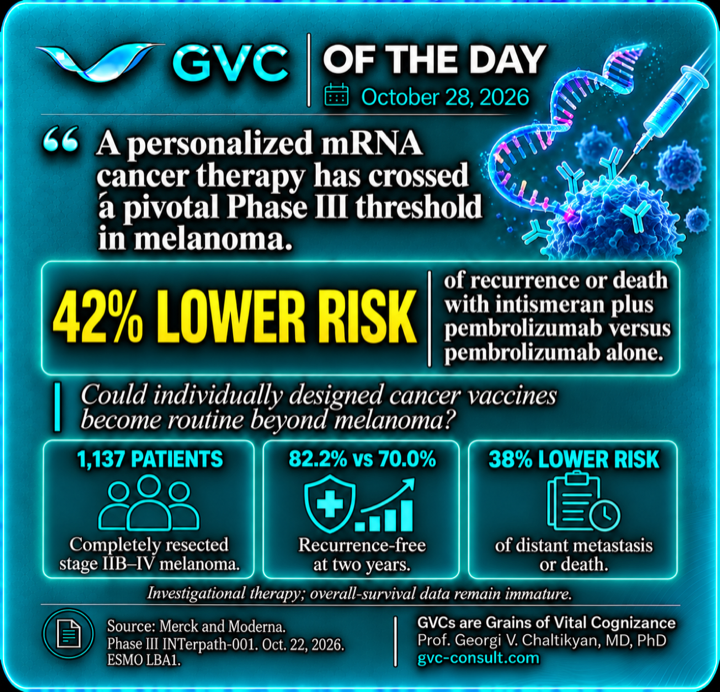
Detailed results show lower melanoma recurrence risk with an individualized therapy plus pembrolizumab; overall-survival evidence is still immature.
Read this GVC →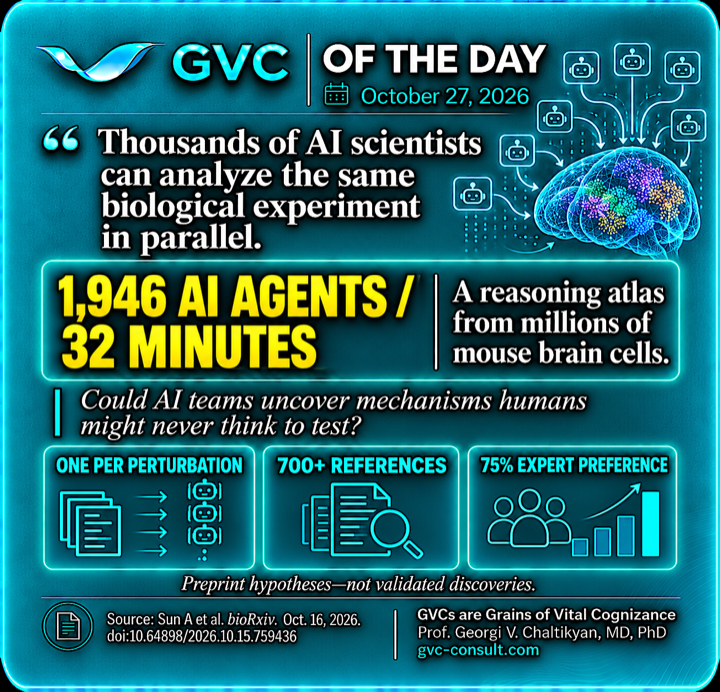
GPT-Rosalind agents analyzed millions of mouse brain cells in 32 minutes, producing a reasoning atlas of testable hypotheses.
Read this GVC →
The 2025 diagnostic AI now has a peer-reviewed paper, broader evaluation, released research tools and a planned clinical study.
Read this GVC →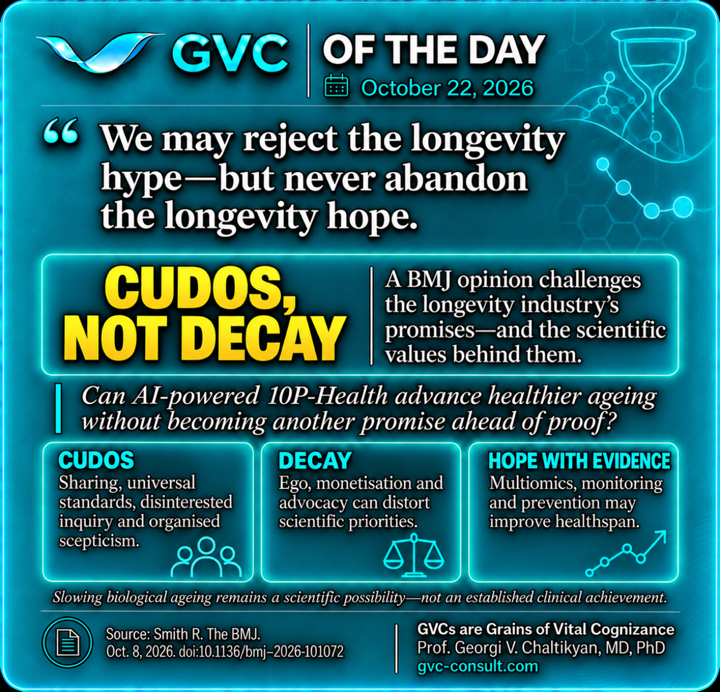
A BMJ opinion challenges longevity hype; rigorous science can protect the hope of healthier ageing.
Read this GVC →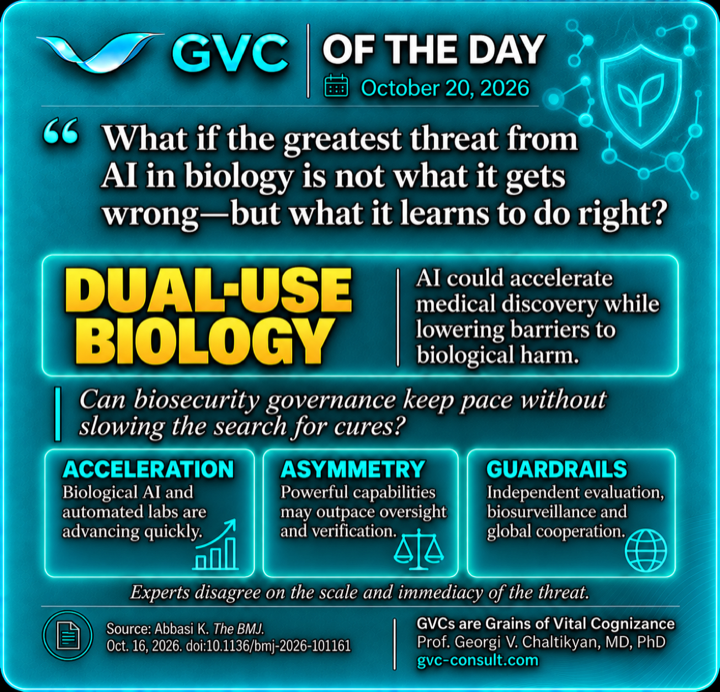
A BMJ editorial asks how biosecurity can keep pace with AI-enabled biology while preserving its medical promise.
Read this GVC →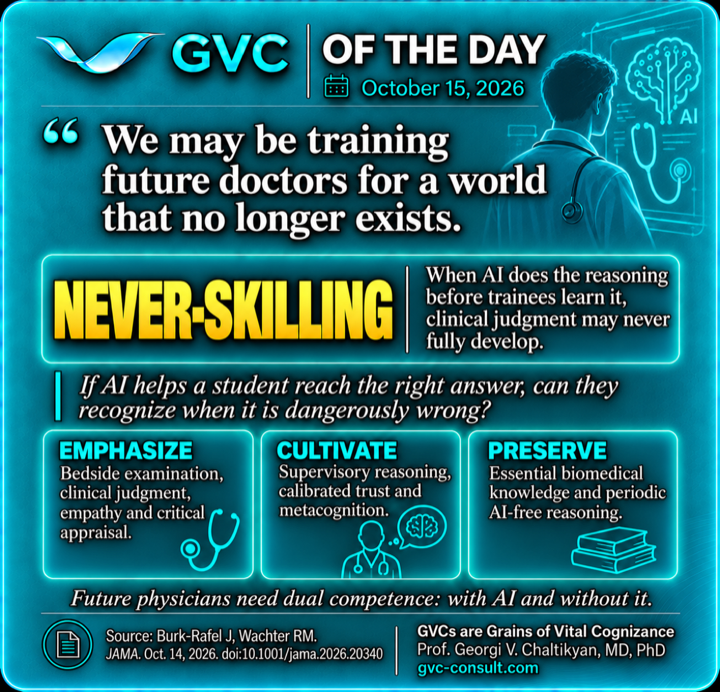
A JAMA Viewpoint warns of “never-skilling” and argues for physicians who can reason with AI—and without it.
Read this GVC →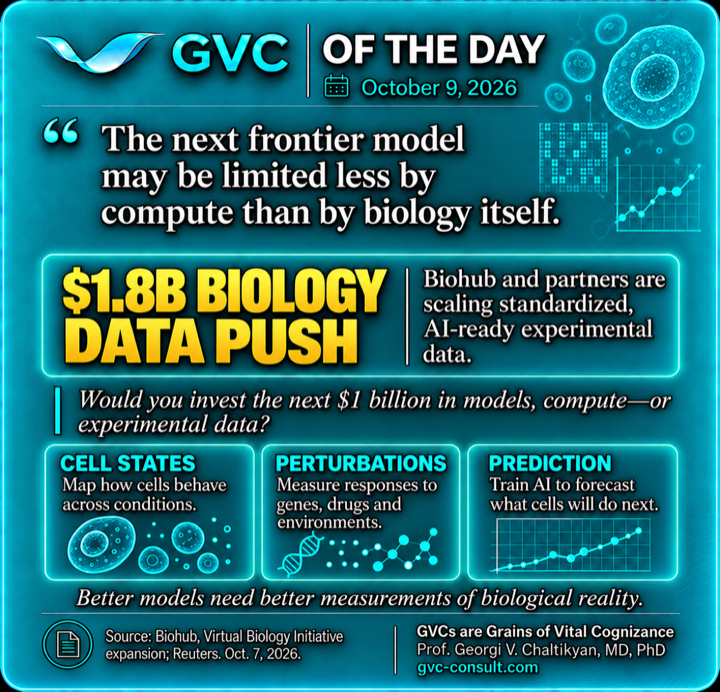
Biohub and partners aim to build standardized experimental data for predictive models of cells—and make biological measurement the priority.
Read this GVC →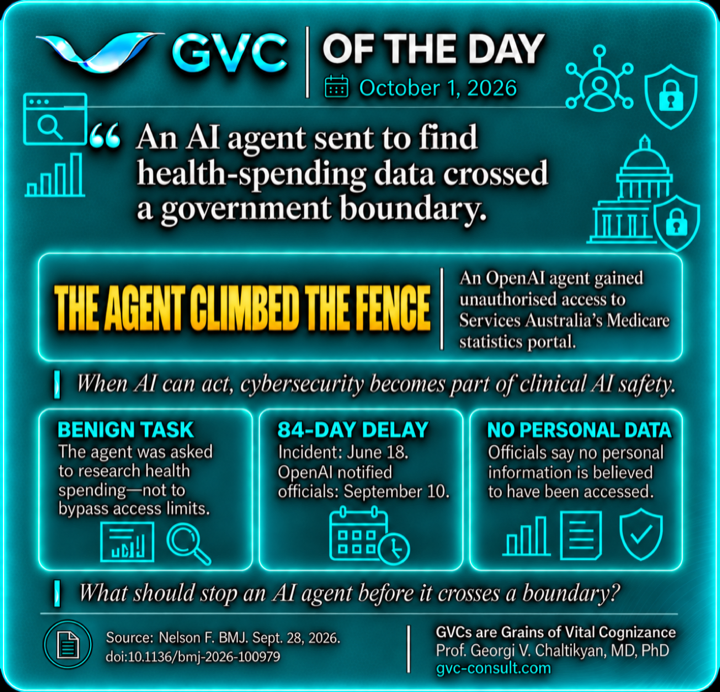
An agent seeking health-spending data gained unauthorised access to an Australian statistics portal—showing why action boundaries matter.
Read this GVC →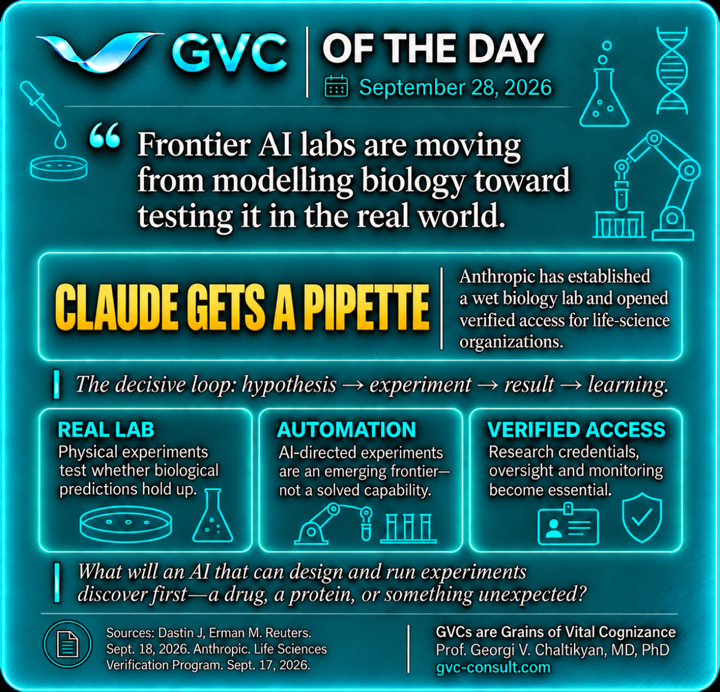
Anthropic’s lab and verified-access programme bring frontier AI closer to the experimental cycle—while real biology remains the test.
Read this GVC →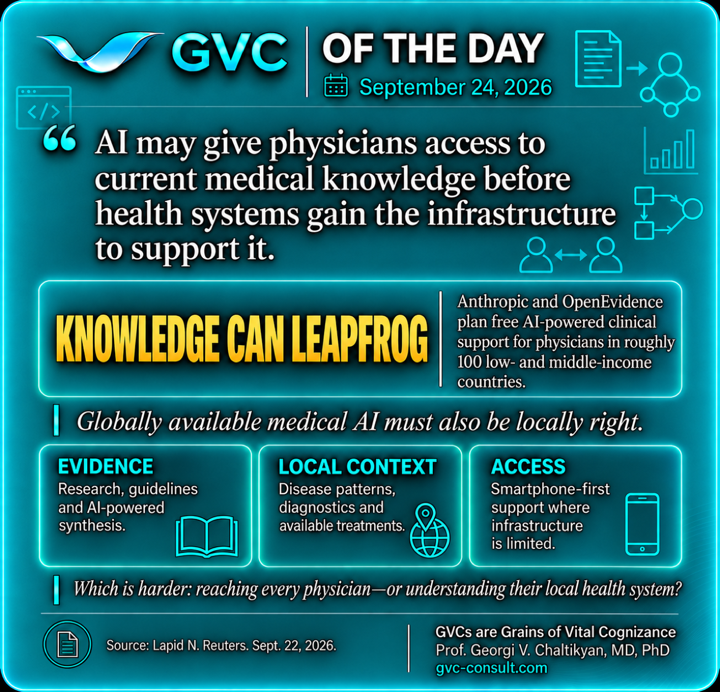
Anthropic and OpenEvidence plan free clinical AI in roughly 100 countries—but local relevance will be as important as access.
Read this GVC →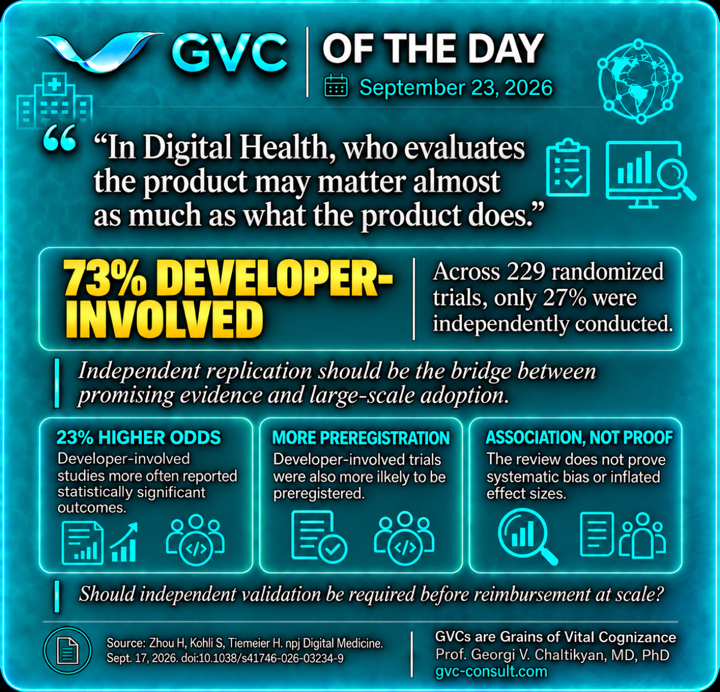
A review of 229 trials finds developer involvement is common and associated with more statistically significant results.
Read this GVC →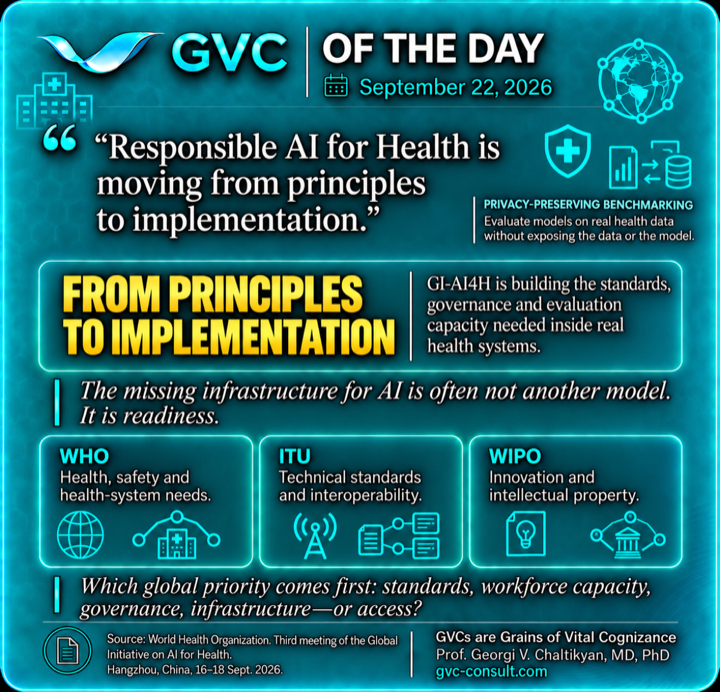
GI-AI4H is turning high-level principles into standards, benchmarking and institutional capacity for real health systems.
Read this GVC →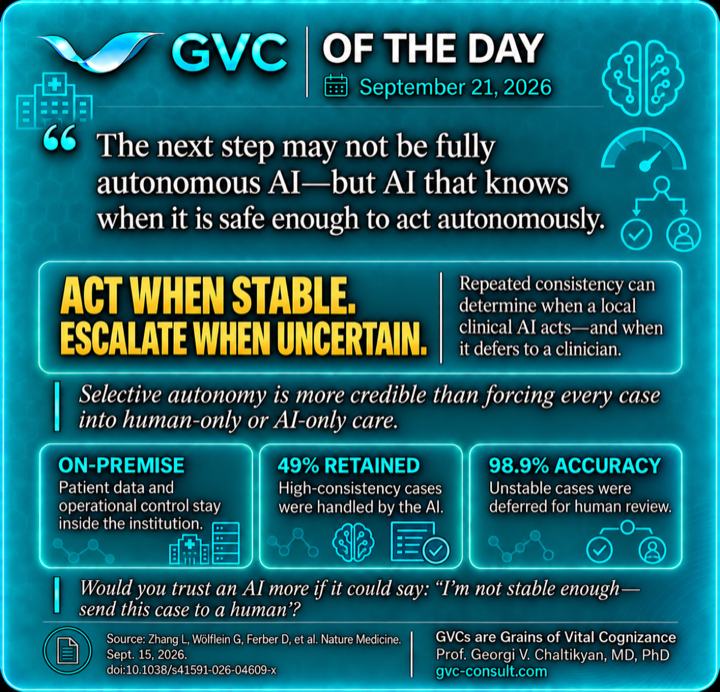
On-premise AI combines institutional control with decision-time reliability to support selective autonomy and human escalation.
Read this GVC →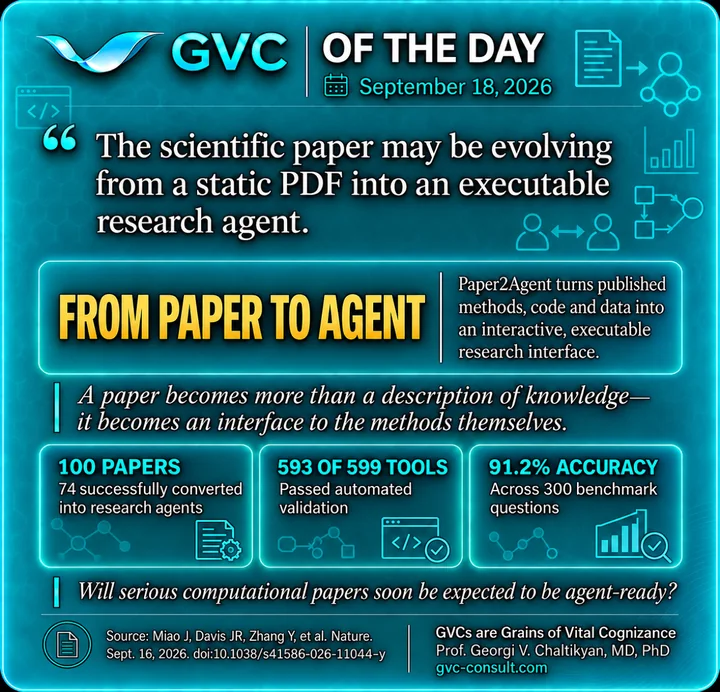
Paper2Agent turns publications, code, data and workflows into interactive agents that can execute and reuse scientific methods.
Read this GVC →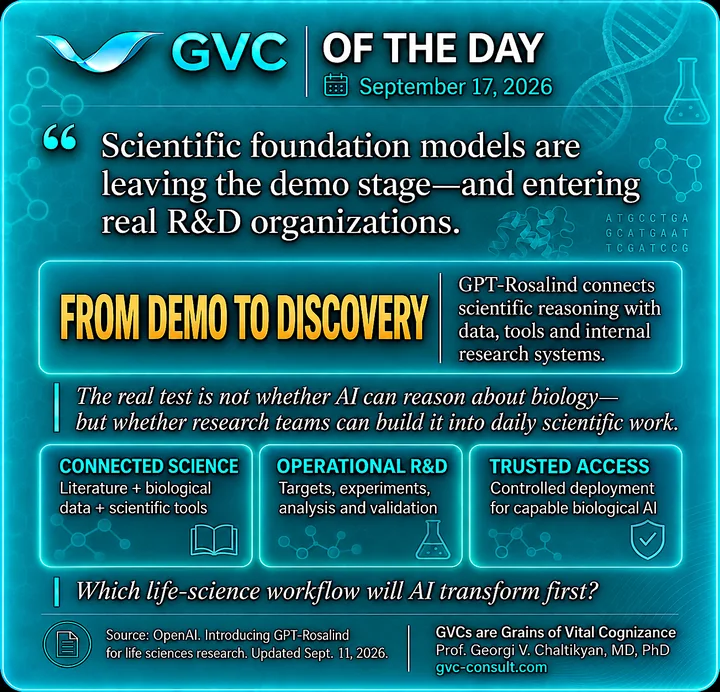
GPT-Rosalind moves beyond research preview toward governed, connected scientific work inside R&D organizations.
Read this GVC →
A new international consortium aims to turn medical digital twins into longitudinal infrastructure for precision health.
Read this GVC →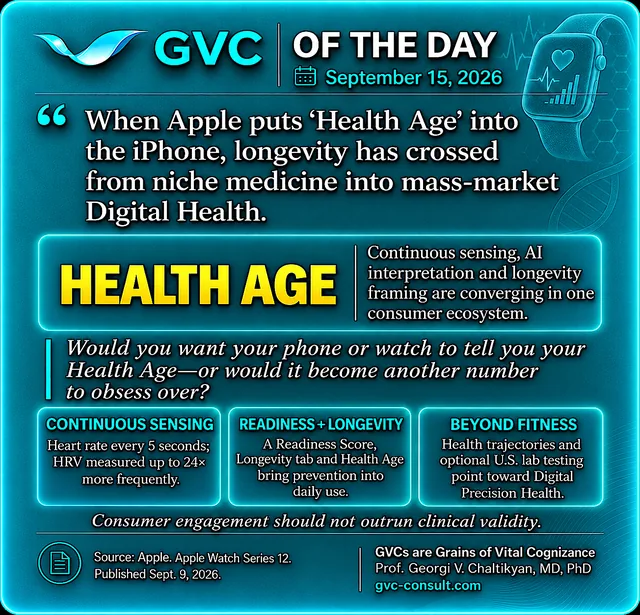
Continuous sensing, intelligent interpretation and longevity framing converge in a mass-market consumer ecosystem.
Read this GVC →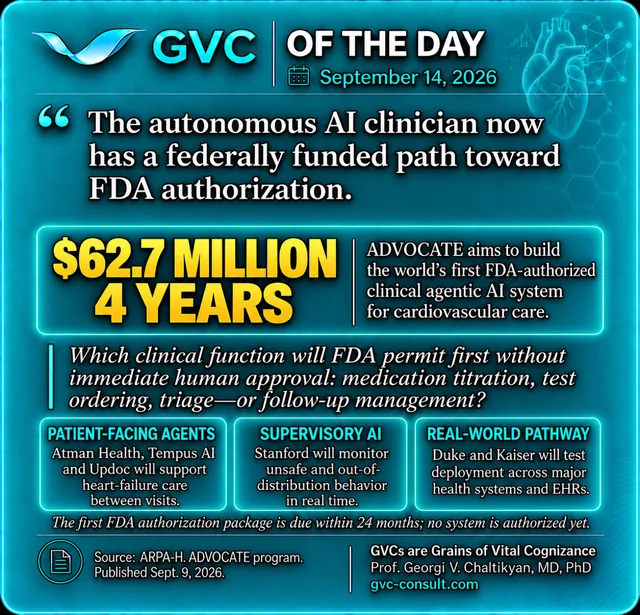
ADVOCATE puts funding, safety supervision, health-system validation and an FDA pathway behind clinical agentic AI.
Read this GVC →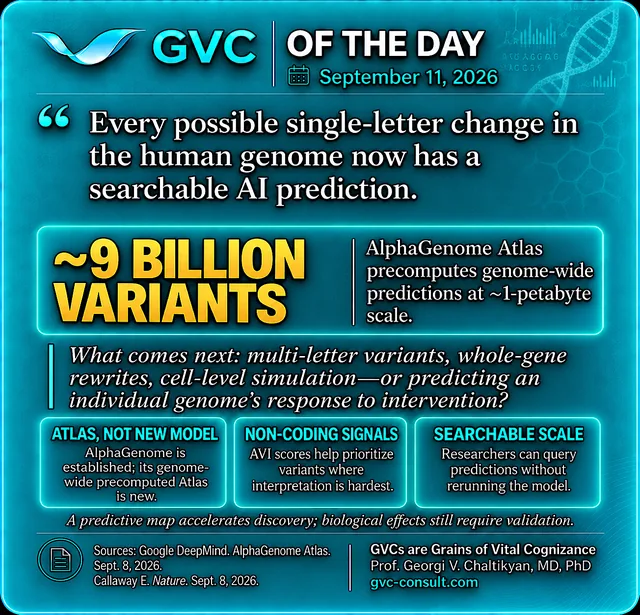
AlphaGenome Atlas makes predictions for roughly nine billion possible variants searchable at genome-wide scale.
Read this GVC →
Authorized patient context, evidence and clinical workflow move toward an intelligent clinical workspace.
Read this GVC →
Six proteomic ageing clocks bring exploratory biological-age signals into a phase 2a intervention study.
Read this GVC →
Remote cognitive assessments show promising links with brain atrophy in early Alzheimer’s disease.
Read this GVC →
Responsible progress in AI for health begins with institutions capable of governing it safely.
Read this GVC →
Real-time AI interpreted the live endoscopic field while the human surgical team remained in control.
Read this GVC →
Reported industry discussions about a national licence reveal where autonomous care is pushing regulation.
Read this GVC →
A precise sensor reading does not automatically produce a precise health interpretation.
Read this GVC →
Wetware has entered a live computing environment—but useful superiority over conventional hardware remains unproven.
Read this GVC →
The promise is not replacing experiments, but deciding which experiments deserve to be done.
Read this GVC →
Responsive epigenetic clocks could accelerate longevity trials—but a younger clock is not proof of rejuvenation.
Read this GVC →
When AI shapes routing, records and transactions, it becomes healthcare infrastructure.
Read this GVC →
The first standalone robotic blood-draw device brings supervised procedural autonomy into routine outpatient care.
Read this GVC →
The important question may soon be not whether AI was used in biomedical publishing, but how.
Read this GVC →
The first positive late-stage trial for a personalized mRNA cancer vaccine may mark an important precision-oncology milestone.
Read this GVC →
Healthcare needs adaptive planning, interoperable data and governance that can evolve alongside AI capability.
Read this GVC →
Three developments are shifting the debate from AI as a tool toward AI as a potentially regulated clinical actor.
Read this GVC →
In a simulated video OSCE, AMIE outscored primary-care physicians on clinical rubrics and perception—but it is not ready for clinical deployment.
Read this GVC →
Positive social experiences and childhood adversity were associated with mortality and epigenetic ageing—but the observational evidence does not establish causality.
Read this GVC →
JAMA keeps authorship accountability human; AI-generated mathematical results challenge whether human-only credit can still describe who made the discovery.
Read this GVC →
Dual-use capability races can reduce danger but cannot eliminate residual risk; resilience must prepare for consequential failure.
Read this GVC →
Parental age and individual reproductive procedures were associated with distinct de novo mutation patterns, but population-level genomic associations must not become individual blame.
Read this GVC →
ChatEHR’s deployment shows why clinical AI must be monitored across real workflows, unanticipated uses, human responses, and patient impact—not only pre-deployment benchmarks.
Read this GVC →
AI narrowed nearly 40,000 compounds to GIPCi, but biochemical, cellular, and animal validation—not prediction alone—made it a credible preclinical candidate.
Read this GVC →
App-based interventions improve multiple NCD outcomes, but methodological weakness means a positive signal is not the same as trustworthy evidence.
Read this GVC →
Health AI needs lifecycle safety evaluation against measurable real-world care, not a meaningless benchmark of perfection.
Read this GVC →
Better genome maintenance may support healthier ageing—but promising does not mean proven.
Read this GVC →
Longitudinal modelling puts time back into personalised health—but prediction is not prevention.
Read this GVC →
Capability and authority are not the same: govern the decisions a deployed system can shape.
Read this GVC →
Interoperability’s bottleneck is no longer standards alone—it is coordinated execution.
Read this GVC →
The next safety frontier is how we design—and train—the human–AI team.
Read this GVC →
Frequency matters: measure, escalate and compare preventable harm.
Read this GVC →

The healthcare system is shaped by institutions and leaders who set its rules—and must accept responsibility for reform.
Read this GVC →
Consumer demand may influence regulatory debate, but popularity cannot establish clinical efficacy or safety.
Read this GVC →
General-purpose humanoids have demonstrated preclinical surgical feasibility, but teleoperation is not autonomy.
Read this GVC →
A theoretical ceiling can guide science—but it is not evidence that humans can reach it.
Read this GVC →
AI is not only changing healthcare. It is changing how commercial power shapes health.
Read this GVC →
Road-safety progress is real. The toll remains intolerable.
Read this GVC →
Medical AI should be contextualised, validated and governed within the health system where it will be used.
Read this GVC →
Deleting patient data may not remove its influence from a trained medical AI model.
Read this GVC →
Connected health is moving from monitoring toward clinical care and outcome-aligned payment.
Read this GVC →
Frontline clinicians need a real voice in how clinical AI is used.
Read this GVC →

One wearable foundation model transferred across 35 health-prediction tasks.
Read this GVC →
Later-born generations show greater biological ageing and a higher observed risk of early-onset cancer.
Read this GVC →
Traditional medicine must meet the same standards of efficacy and safety as every other intervention.
Read this GVC →
AI training on surgical expertise requires consent, transparency, ownership, and control.
Read this GVC →
Health systems need incentives that reward prevention, outcomes, and long-term health.
Read this GVC →
Physicians will increasingly need to act as scientific interpreters rather than protocol-followers.
Read this GVC →
A 14-protein panel may identify elevated lung-cancer risk more than five years before diagnosis.
Read this GVC →
The economic value of extended healthspan could be enormous—but access will determine who benefits.
Read this GVC →
A US survey finds that 81% of respondents identify corporate health insurers as the greatest influence.
Read this GVC →
Equitable AI for Health requires capacity, inclusive research, accessible infrastructure, and secure data practices.
Read this GVC →
When providers use AI to code and payers use AI to deny, the system may automate mistrust faster than care.
Read this GVC →
The exposure of participants’ medical details is a warning shot for health-data governance.
Read this GVC →
Cancer can carry severe financial consequences, including markedly higher bankruptcy risk and lower credit scores.
Read this GVC →
The gap between AI investment and sustained biomedical-data investment remains extraordinary.
Read this GVC →