
July 31, 2026 · Consumer AI for Health, patient safety and evidence
How Can We Make Health AI Safer?
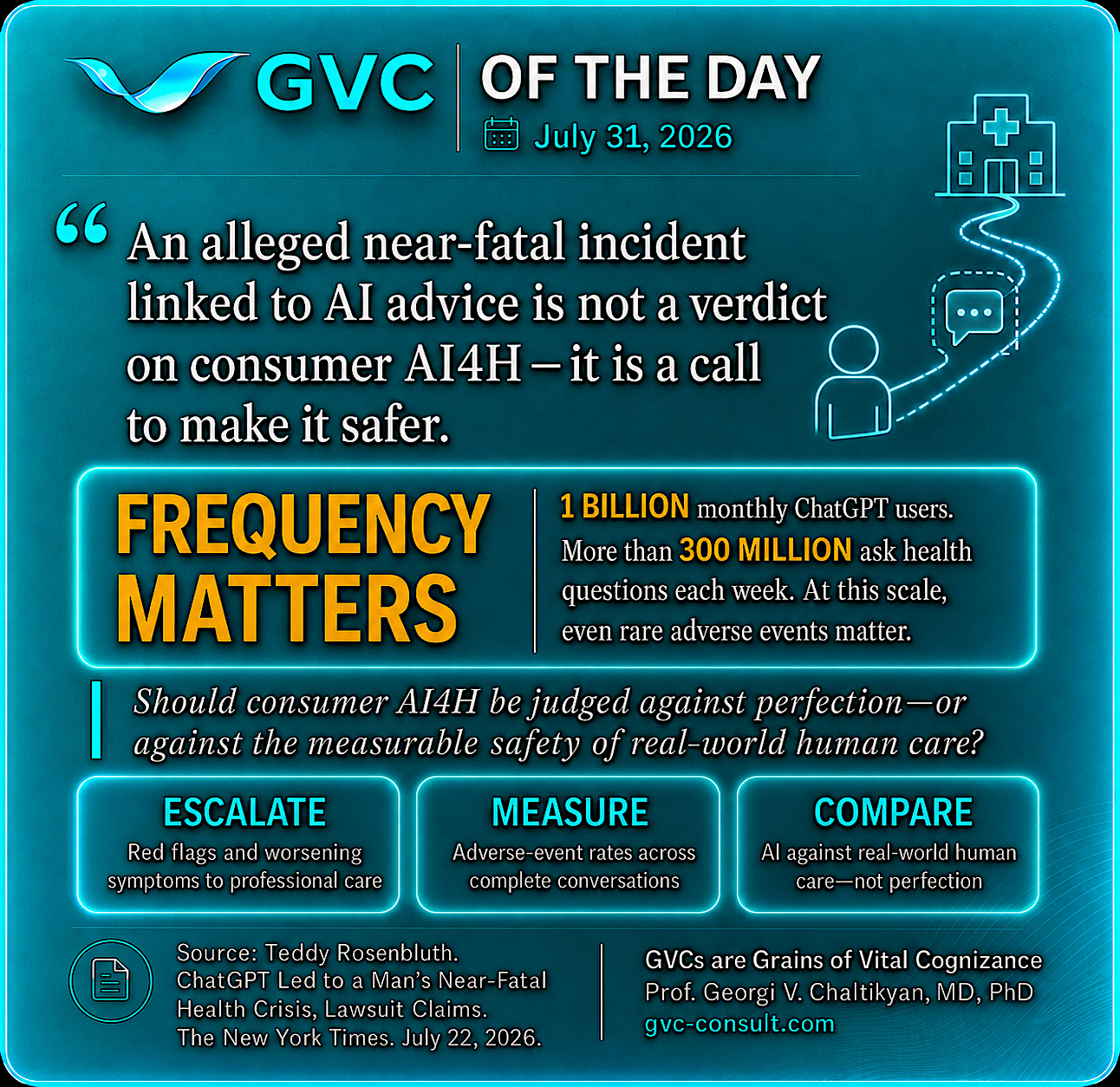
The New York Times reports that a lawsuit alleges ChatGPT-4o repeatedly reassured a man while his symptoms worsened, contributing to delayed care before a massive pulmonary embolism. These are serious allegations, but they remain claims in litigation and have not been proven.
OpenAI says its health experience is designed to support—not replace—medical care and is not intended for diagnosis or treatment. The company also reports that more than 300 million people ask ChatGPT health-related questions each week and says newer models have improved at recognising when urgent care may be needed, seeking relevant context and communicating uncertainty.
No form of healthcare is risk-free, and AI-augmented care will probably not be either. The evidence-based standard should therefore examine how often adverse events occur, how severe and preventable they are, how many harms AI causes or prevents, and how its safety compares with actual human or human-plus-AI care. This does not excuse AI failures; it defines the outcome that matters: reducing the frequency and severity of preventable harm below what patients experience today.
Supporting context: OpenAI. Launching Health in ChatGPT. Published July 23, 2026. The one-billion monthly-user figure on the card is a Sensor Tower estimate reported in June 2026.