
September 15, 2026 · Wearables, longevity and Digital Precision Health
Health Age Goes Mainstream
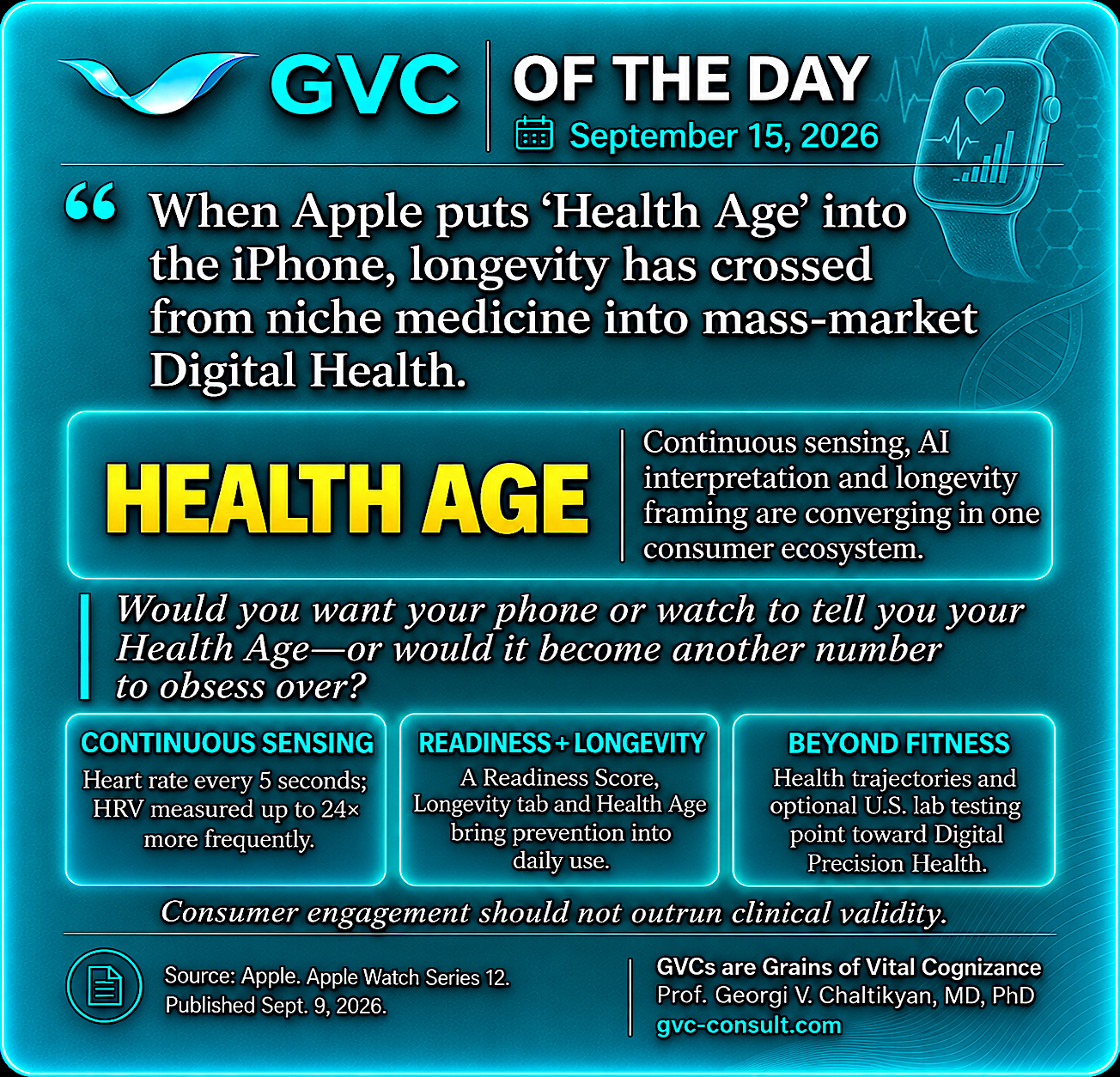
Apple Watch Series 12 is consequential for more than its hardware. Its new Health Sensing System measures heart rate every five seconds and increases the frequency of heart-rate variability measurements by up to 24 times.
A new Readiness Score combines activity, training load, vitals and sleep. Apple is also redesigning the Health app around a dedicated Longevity tab and a new Health Age feature that compares selected metrics with chronological age. In the United States, users will also be able to schedule and purchase supported laboratory testing through the Health app.
From fitness tracking to a longitudinal health interface
The pieces are beginning to converge: continuous wearable sensing, AI-generated interpretation, longitudinal health trajectories, biological-age framing, laboratory biomarkers, and one familiar consumer interface.
That begins to resemble consumer-scale infrastructure for Digital Precision Health—continuous, predictive, preventive and personalized health brought into everyday life.
My takeaway
Longevity is moving from specialist clinics and biomarker startups toward a default user experience. Apple has something most longevity platforms do not: the potential to place these concepts before hundreds of millions of people.
Important limitation: a Health Age is only as useful as the evidence behind its inputs and algorithms. A compelling interface can improve engagement, but consumer adoption should not outrun clinical validity.
GVCs are Grains of Vital Cognizance, by Prof. Georgi V. Chaltikyan, MD, PhD.